Skip to content

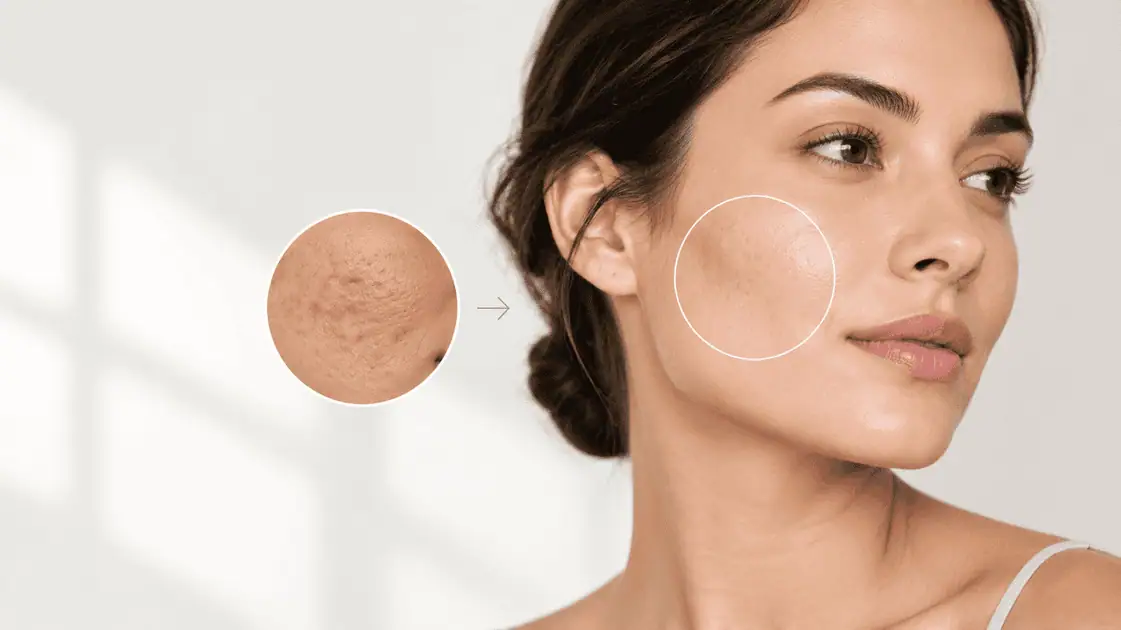
If you have spent a year cycling through serums and still see the same shadows and dips under your bathroom light, the problem is not your discipline. Most products were never built to reach the layer where acne scars actually live.
Acne scar treatment works when it targets the right thing: damaged collagen beneath the surface. Here is what that means for your skin, and which treatments genuinely make a difference.
Can anything be done about old acne scars?
Yes, in most cases. Acne scars are collagen damage beneath the surface, so serums and exfoliants cannot reach them, but laser treatment can. Lasers remove damaged layers and prompt the skin to build new collagen, which typically smooths uneven texture over several months. Most scarring cannot be erased, though its appearance often improves significantly, and results vary by scar type.
Why Acne Scars Do Not Fade the Way Dark Marks Do
Acne scars form when inflammation damages the collagen inside your skin, and the skin rebuilds unevenly as it heals. That is a structural problem, different from the flat brown or red marks left after a pimple. Those are post-inflammatory hyperpigmentation, a color issue that usually fades on its own. A true scar will not.
This is why serums and exfoliants disappoint so many people, and why acne scar removal is not something a topical product can deliver. They help with discoloration but cannot rebuild what inflammation broke. One note before you start looking at options: you usually address scarring once active breakouts are under control.
The Four Types of Acne Scars, and Why the Type Decides the Treatment
There is no single answer to which treatment works, because there is no single kind of acne scar. What you have determines what will help.
- Ice pick scars: narrow and deep, extending into the dermis, like small sharp punctures
- Boxcar scars: wider depressions with clearly defined edges, often on the cheeks and temples
- Rolling scars: shallow, wave-like dips caused by collagen damage tethering the surface from below
- Textural irregularities: general unevenness left after inflammatory acne, without a distinct scar shape
Most people have more than one type at the same time, across different areas of the face. That’s why a single product rarely resolves everything, and why acne scar treatment options are usually planned as a combination.
Acne Scar Resurfacing in Escalon, CA: What Actually Works
Effective treatments do two things at once. They remove damaged surface layers with precision, and they trigger the skin to build new collagen where it was lost. Fractional and ablative lasers accomplish both, which is why acne scar resurfacing has become the clinical standard for textural scarring. Treatment depth matches scar depth: deeper scarring calls for more aggressive resurfacing, while lighter texture responds to gentler settings.
At Tailored Aesthetics Medical Spa, our acne scar treatment in Escalon, CA uses advanced Sciton laser technology:
- HALO®, a hybrid fractional laser combining ablative and non-ablative wavelengths to treat the surface and deeper layers in one session, improving texture and tone together
- ProFractional®, a customizable fractional treatment that creates precise micro-channels to stimulate collagen and gradually soften scar depth
- Contour TRL®, fully ablative resurfacing for more substantial scarring, removing damaged layers and prompting significant collagen remodeling.
- BBL HEROic™, a broadband light treatment for the lingering redness and pigmentation left from old breakouts, which is a tone issue rather than a texture one
How a Provider Decides Which One Is Right for You
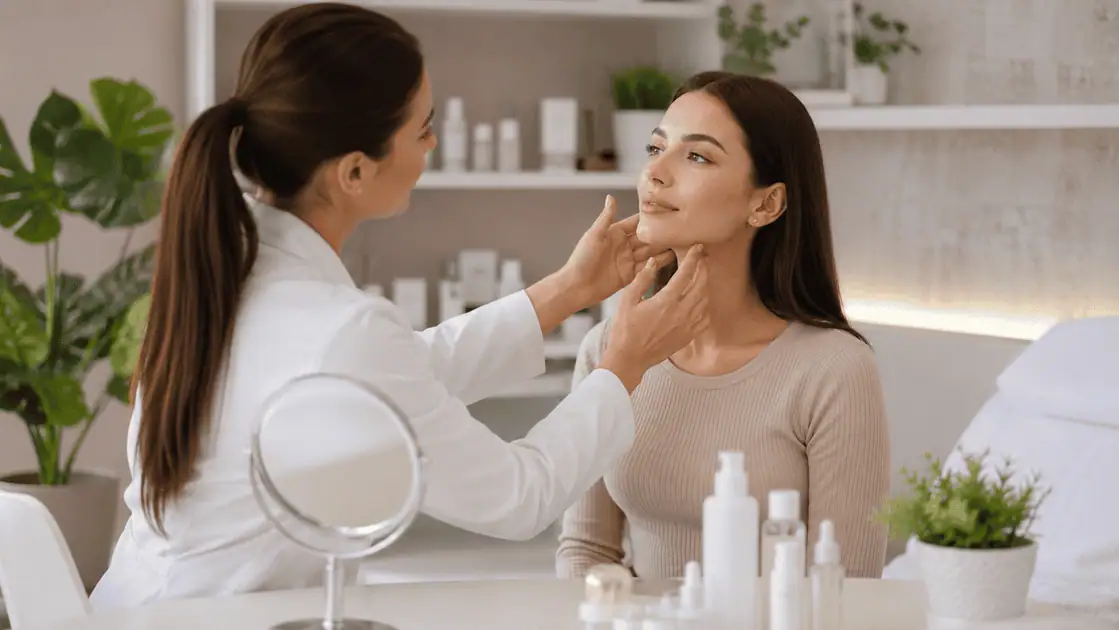
The honest answer is that it depends on your skin, and that assessment happens in person. Choosing well means evaluating scar type, depth, skin thickness, skin tone, and pigment risk together. Providers use the Fitzpatrick skin type scale to determine which laser settings are safe for a given patient, because not every treatment suits every skin tone.
Plans often combine technologies, pairing a resurfacing skin texture treatment with broadband light for residual discoloration. Downtime belongs in that conversation too, since deeper resurfacing trades more recovery time for more correction. Our approach to laser treatment for acne scarring is built around that tradeoff and what fits both your skin and your schedule.
What the Treatment and Recovery Actually Involve
Most sessions start with a skin assessment and numbing, followed by the laser pass itself, which usually takes minutes rather than hours, depending on the area being treated. Patients commonly describe the sensation as heat with some prickling, and comfort measures are part of the plan, not an afterthought.
Recovery scales with intensity. Lighter fractional treatments often mean a few days of redness and a sandpaper-like texture as the skin sheds and renews itself. Deeper resurfacing asks more of you, with several days of visible healing before you feel comfortable going out without makeup. Your provider will tell you what to expect before you book so you can plan around work, events, and sun exposure.
Common Questions About Acne Scar Treatment
Do I need to wait until my acne clears up first?
Usually, yes. Treating texture while new breakouts are still forming means repairing one area while another is being damaged. Most providers want active acne under control before starting resurfacing, and your consultation will cover where you stand.
Will the scars come back after treatment?
Treated scars do not typically return, since the collagen structure has been rebuilt. New scarring can form if you have future inflammatory breakouts, which is why keeping acne managed matters as much after treatment as before it.
Does acne scar treatment hurt?
Most patients tolerate it well. We apply numbing beforehand, and patients often describe the sensation as heat with some prickling rather than sharp pain. Comfort measures are part of the treatment plan, not an afterthought.
What Realistic Improvement Looks Like
Most post-acne scarring cannot be completely erased, but laser treatment can significantly improve its appearance by smoothing texture and rebuilding collagen structure. Many patients benefit from a series of treatments spaced several weeks apart, with the number depending on scar type and depth. Some change shows once initial healing finishes, but collagen remodeling continues for several months, so the skin you see at six weeks is not the final result.
Sun protection and consistent aftercare genuinely affect how well acne scar correction holds over time. If you are tired of guessing which option fits your skin, our team at Tailored Aesthetics Medical Spa in Escalon will assess your scarring and walk you through a plan built for your skin type. Schedule your skin consultation.